

chirurgie-saarbruecken-abouzamel-hernien-lp5

Hernia Surgery Saarbrücken

Minimally Invasive Surgery for Inguinal and Abdominal Wall Hernias

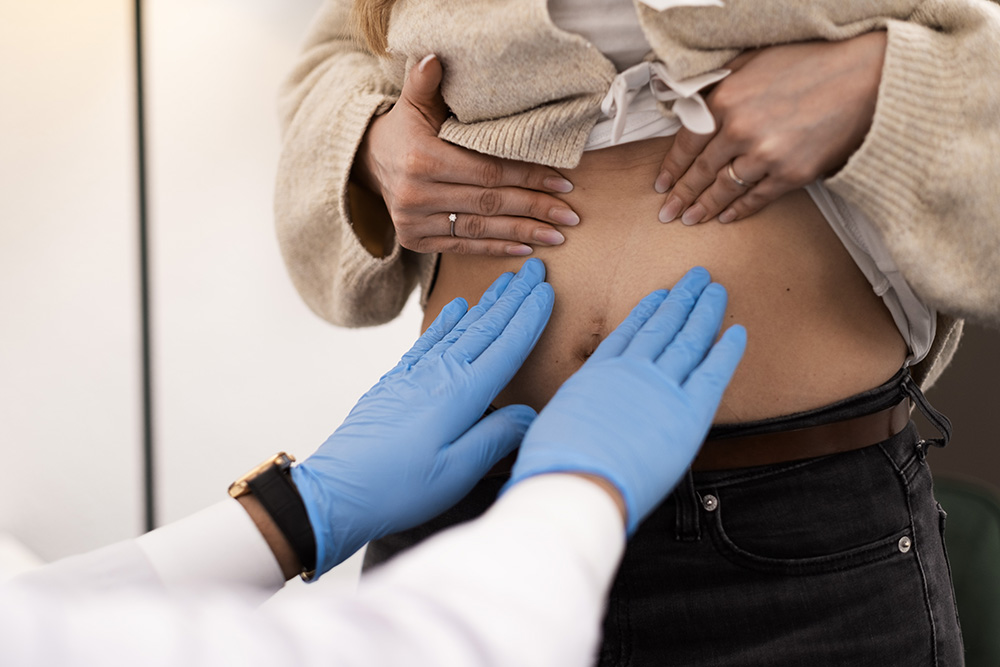
Hernia Surgery Saarbrücken: A hernia—often referred to as an inguinal or abdominal wall rupture—occurs when tissue protrudes through a natural or acquired weakness in the abdominal wall. Typical signs include a palpable or visible bulge, which may be accompanied by a feeling of pressure or pulling, and sometimes pain. Even if symptoms are initially minor, a hernia should be evaluated by a specialist, as it does not resolve on its own.

At our surgical center in Saarbrücken, treatment is provided by Dr. Mohamed Abouzamel, who has specialized in the surgical repair of hernias for many years and utilizes modern minimally invasive techniques. The goal is to close the hernial orifice, permanently stabilize the abdominal wall, and alleviate symptoms. At the same time, we enable the gentlest possible treatment with rapid recovery—even for more complex findings.
surgery-saarbruecken-abouzamel-hernias-lp4

What are Hernias?

Development, Types, and Typical Signs of an Abdominal Wall Hernia

A hernia occurs when tissue or parts of internal organs protrude through a weak point in the abdominal wall. These weak points can be congenital or develop over the course of a lifetime, for example, through physical strain, connective tissue weakness, or following surgical procedures. The resulting hernia often appears as a visible or palpable bulge that may increase when coughing, straining, or standing.

The most common forms include inguinal hernias, umbilical hernias, and incisional hernias following previous surgeries. Initially, hernias do not always cause pain, but they can increase in size over time and cause discomfort. It is important to know that a hernia will not regress without surgical treatment. Early medical evaluation helps to avoid risks such as tissue incarceration, determine the optimal time for treatment, and thereby prevent emergencies.

Overview of the Most Important Abdominal Wall Hernias:
The inguinal hernia is the most common form of hernia. It occurs in the groin area and is often noticeable by a visible or palpable bulge that increases when standing, coughing, or under physical strain.
Depending on the type of hernia and individual requirements, different surgical procedures are used. The goal of every method is to stabilize the weakened posterior wall of the inguinal canal and permanently close the hernial gap.

  • In the classic Shouldice procedure, the hernial gap is closed exclusively using the body’s own tissue. The posterior wall of the inguinal canal is stably reconstructed using multi-layered sutures. In suitable cases, the procedure can also be performed on an outpatient basis and under local anesthesia.
  • In the open Lichtenstein hernia repair, the hernial gap is reinforced tension-free with a special synthetic mesh. In suitable cases, the procedure is performed on an outpatient basis.
Minimally Invasive Procedures – Hernia Surgery Saarbrücken
  • TAPP (Transabdominal Preperitoneal Technique): Using laparoscopy through three small incisions, a synthetic mesh is placed in front of the hernial gap from the inside. The peritoneum is then closed over the mesh. The procedure usually takes less than an hour. Discharge typically occurs on the first day after surgery, and light daily activities are possible again early on.
  • TEP (Totally Extraperitoneal Technique): Here, too, the repair is performed via three small incisions, but outside the abdominal cavity within the layers of the abdominal wall. The hernial gap is stabilized tension-free with a mesh. The cosmetic result is usually inconspicuous.
  • E-TEP (Enhanced Extraperitoneal Technique): This procedure is similar to TEP but allows for a better overview through an adapted access technique. This allows additional abdominal wall hernias to be treated in the same procedure if necessary.
An umbilical hernia appears as a bulge in the area of the navel. It can be congenital or develop over the course of a lifetime, for example, due to increased pressure in the abdominal cavity or connective tissue weakness. Depending on the size of the hernial gap, closure is performed either by a suture or—especially for larger findings—by inserting a synthetic mesh for stable reinforcement. The procedure can often be performed on an outpatient basis.
An incisional hernia occurs at a previous surgical scar if the abdominal wall did not heal with complete stability there. The hernia site can develop months or even years after the original procedure. Here, too, the hernia site is closed tension-free, usually using a mesh placed in a suitable layer of the abdominal wall. The goal is a stable repair with as little discomfort as possible.

Surgical Procedures – Hernia Surgery Saarbrücken

Open Techniques

  • Direct Suture: Very small hernial gaps (under 1 cm) can be stabilized by direct suture closure. In suitable cases, the procedure is performed on an outpatient basis.
  • Sublay Technique: In this method, after exposing the hernia site, a mesh is placed between the abdominal wall muscles and the peritoneum or behind the abdominal wall. This positioning achieves a stable and low-tension repair.

Minimally Invasive Procedures

  • EMILOS Technique: For larger abdominal wall hernias or rectus diastasis, the repair is performed via a small skin incision using endoscopic instruments. For stabilization, a mesh is inserted using the sublay technique, i.e., between the muscle layer and the peritoneum.
  • E-TEP Technique: With this method, abdominal wall and inguinal hernias can be repaired via small access points outside the abdominal cavity. If necessary, several hernia sites can be treated in the same procedure.
  • IPOM Procedure: The hernial gap is visualized via laparoscopy and reinforced from the inside with a specially coated mesh. The procedure is usually performed as an inpatient under general anesthesia and allows for an inconspicuous cosmetic result.
  • IPOM Plus: Here, the hernial gap is additionally closed with a suture before the mesh is inserted to further improve stability.
  • Reconstruction of the Linea Alba: In the case of rectus diastasis, the separated abdominal muscles can be tightened via small incisions in the lower abdomen and reconstructed with stable sutures. If necessary, a mesh is used for additional reinforcement.
In the case of large or complex abdominal wall hernias, there is a significant defect in the abdominal wall that cannot simply be closed directly. If a hernia exists for a long time, parts of the intestine can remain permanently outside the abdominal cavity. This can make repositioning difficult and require specially adapted surgical planning.

Special Treatment Techniques for Large Defects

  • Component Separation: In this technique, individual muscle layers of the abdominal wall are detached and shifted so that the hernial gap can be closed tension-free. A mesh can be used for additional stabilization. The procedure can be performed as an open or minimally invasive surgery.
  • Botulinum Toxin Injection: Targeted injections into the lateral abdominal muscles cause them to relax temporarily. After a few weeks, this allows the abdominal wall to be reconstructed more easily and with less tension.
  • Pneumoperitoneum: For very large hernias, the abdominal cavity can be gradually expanded before surgery through controlled air introduction. This creates sufficient space to safely return the hernia contents to the abdominal cavity during the operation.
  • Abdominal Wall Replacement: If the stability of the patient’s own tissue is insufficient, the abdominal wall can be reconstructed with special replacement material to enable a permanent repair.
A femoral hernia occurs below the groin and more frequently affects women. Since this form of hernia is often less visible, it is sometimes only diagnosed when symptoms become more severe.
A femoral hernia is repaired surgically via an access point in the groin area or minimally invasively. To increase the stability of the abdominal wall and reduce the risk of recurrence, a special mesh is often used. This can be inserted minimally invasively (e.g., via TEP or TAPP) or via an open access point. For very small findings, a pure suture technique may be sufficient in selected cases.
A diaphragmatic hernia is an enlargement of the lower esophageal sphincter. This allows stomach acid to rise into the esophagus, causing heartburn, regurgitation, and pain. Pronounced findings can also lead to swallowing, heart, and lung complaints.
In minimally invasive surgical treatment, the hernial gap is repaired in a particularly gentle manner to restore normal function. Improvement is usually noticeable immediately after the operation.
If the abdominal muscles separate during pregnancy, bothersome bulges may remain when the abdomen is tensed after birth. In some cases, these do not regress on their own. Here, the abdominal wall can be tightened by means of a minimally invasive procedure to achieve a cosmetically pleasing result.
surgery-saarbruecken-abouzamel-hernias-lp3

When is Hernia Surgery Advisable?

Symptoms, Risks, and the Right Time for Treatment

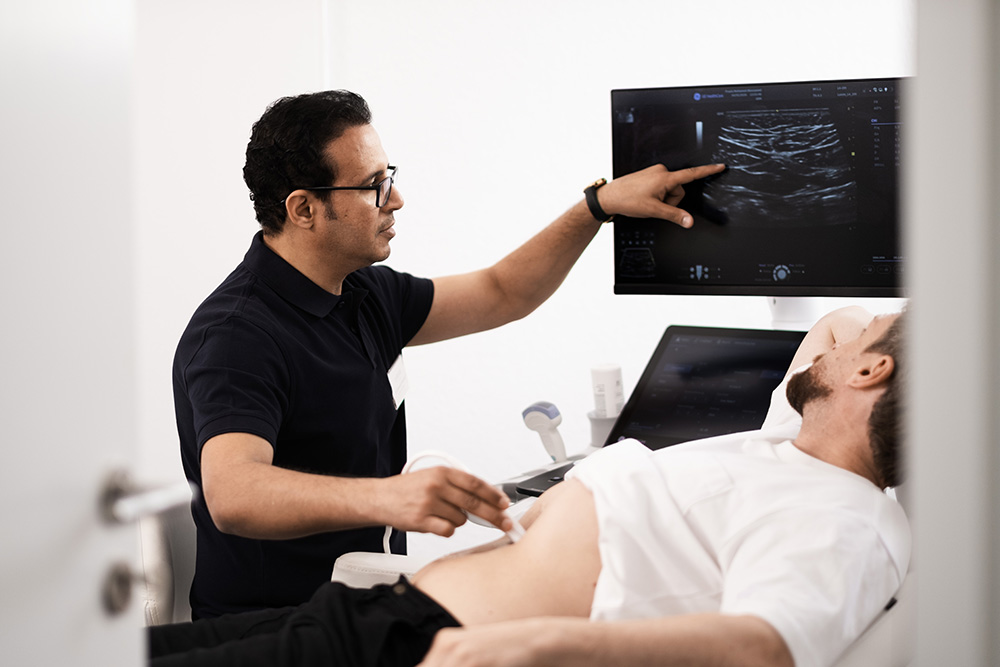
Since a hernia does not regress without surgical treatment, surgery is recommended in many cases. A particular risk exists if tissue or parts of the intestine become trapped in the hernia. In such situations, severe pain and circulatory disorders can occur, requiring prompt medical care. The goal of a planned operation is to prevent these complications and permanently stabilize the abdominal wall.

Whether and when hernia surgery is advisable depends on various factors, including the type and size of the hernia, the symptoms, and the individual health situation. The decision for a surgical procedure is always made after careful consideration and detailed medical consultation.
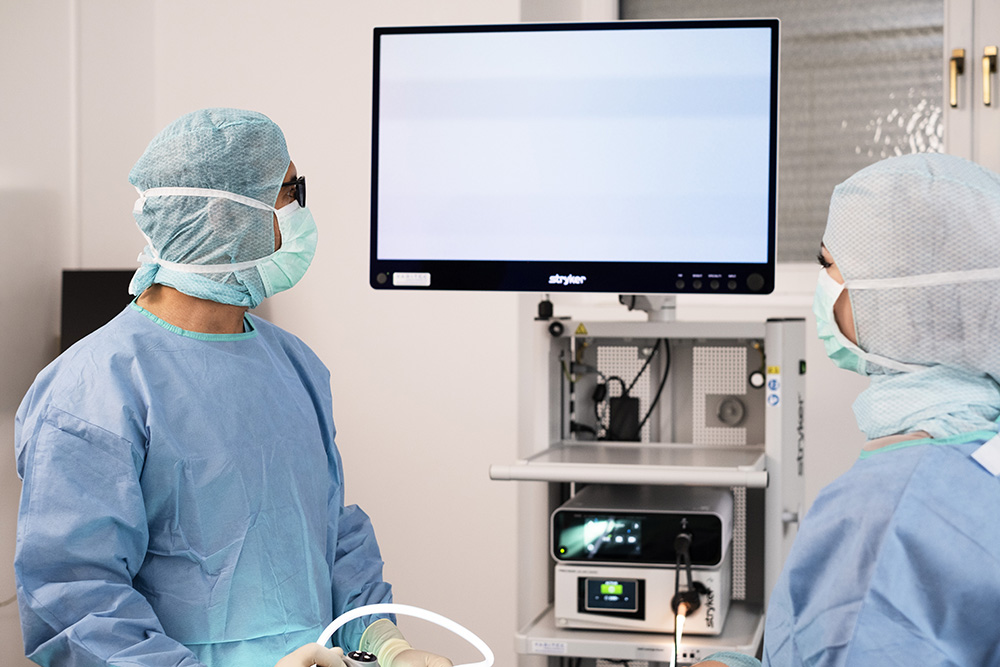
Surgical treatment of hernias at our practice for Hernia Surgery Saarbrücken is often performed using minimally invasive procedures, also known as keyhole surgery. In this process, the abdominal wall is not opened extensively; instead, work is performed via several small skin incisions. With the help of a camera and fine instruments, the hernia can be precisely visualized and treated.

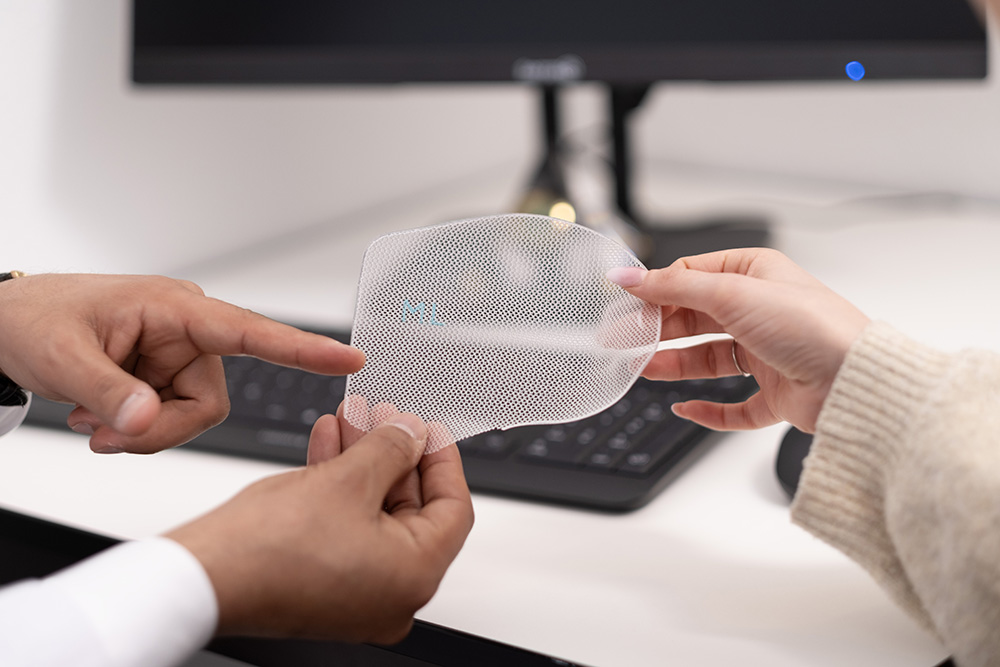
A central goal of minimally invasive hernia surgery is the tension-free stabilization of the abdominal wall. In many cases, a special mesh is used for this purpose, which reinforces the weakened area and can reduce the risk of recurrence. This approach has proven itself in modern surgery and is an integral part of current treatment standards.

For many patients, minimally invasive surgery offers advantages such as smaller scars, less postoperative pain, and a faster return to daily life. Which surgical procedure is suitable in an individual case is determined in our center as part of the medical consultation, taking all medically relevant factors into account.

surgery-saarbruecken-abouzamel-hernias-lp2

Hernia Surgery with Proven Specialization

Surgical Expertise of Dr. Mohamed Abouzamel

The treatment of inguinal and abdominal wall hernias requires special experience, particularly for complex or large defects. At our surgical center in Saarbrücken, hernia operations are performed by Dr. Mohamed Abouzamel, Specialist in Surgery.
Dr. Abouzamel was for many years the Managing Senior Physician and Head of Minimally Invasive Surgery at the Knappschaftsklinik Sulzbach. The hernia surgery department there was awarded the Seal of Quality from the German Hernia Society (DHG) under his leadership—evidence of structured quality and special experience in this field.

Dr. Abouzamel has specialized in the surgical repair of hernias for many years. Through targeted advanced training in international centers, including Manchester, London, and New York, he deepened his knowledge of modern minimally invasive techniques. In addition to standard procedures, complex abdominal wall reconstructions are part of his treatment spectrum. A particularly challenging case of a patient from Cairo, who had previously been classified as inoperable in several international clinics, was successfully operated on by Dr. Abouzamel and his team.

Patients thus benefit from specialized hernia surgery that is oriented towards current scientific standards and enables individual solutions even for complex findings.
surgery-saarbruecken-abouzamel-hernias-lp1

Frequently Asked Questions About Hernia Surgery

FAQ – Hernia Surgery Saarbrücken
The type of anesthesia depends on the surgical procedure and the general state of health. Both general anesthesia and other suitable forms of anesthesia are possible and will be discussed with you in advance.
Before the procedure, a detailed medical consultation and examination take place. Depending on the individual situation, further preliminary examinations may be necessary. As a rule, you will receive instructions regarding fasting, medication intake, and the procedure on the day of surgery.
Recurrence is fundamentally possible, but the risk depends on various factors, such as tissue quality, the size of the hernia, or physical strain after surgery. Modern, tension-free procedures with mesh reinforcement reduce the risk of recurrence.
Previous surgeries can influence surgical planning. In such cases, particularly careful diagnostics are necessary to choose the appropriate access procedure and the safest technique.
After the procedure, physical rest and adapted exertion are important. You will receive individual recommendations on movement, daily activities, and sports to support the healing process.

Individual Consultation for Hernia Diseases

Hernia Surgery Saarbrücken

A hernia should be taken seriously and evaluated by a specialist. Early evaluation makes it possible to individually determine the optimal time and the appropriate surgical procedure and to minimize possible risks. Modern minimally invasive techniques today offer proven and gentle treatment options that are based on current medical standards.

If you would like to receive a consultation regarding hernia surgery in Saarbrücken or have questions about diagnostics, the treatment process, or aftercare, we are happy to assist you personally.
Schedule an appointment now—for a sound assessment and individually tailored surgical treatment.

Back to all services

Schedule an appointment now